 PSW Portal
 Support Center
 User Manuals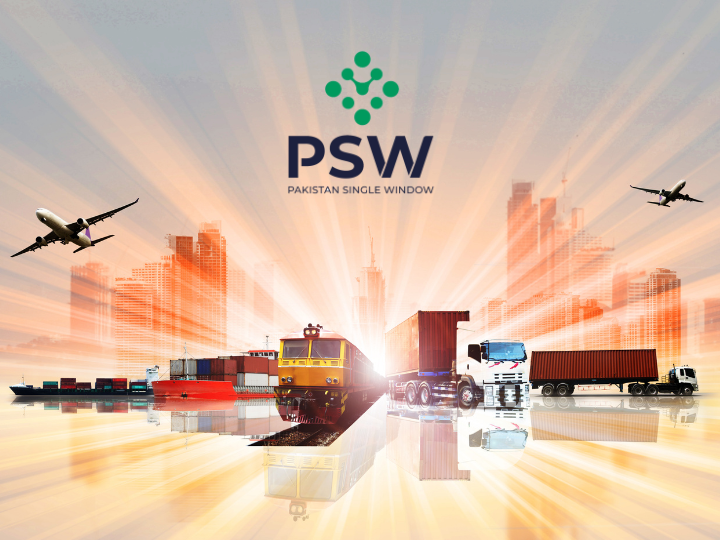
Pakistan’s export sector is a key driver of the country’s economic growth, yet it continues to face significant challenges. A widening trade imbalance, slow operational processes, and fragmented regulatory systems have historically made exporting complex, costly, and time-consuming. Businesses often had to navigate multiple government offices, submit duplicate documents, and follow up across agencies. These delays increased the overall cost of doing business.
In today’s global trade environment, efficiency, transparency, and predictability are essential for competitiveness. Digitalization has become a transformative solution, with Pakistan Single Window (PSW) emerging as an innovative digital platform designed to streamline trade processes. PSW centralizes trade operations, enables single submissions, and connects regulatory systems and banks in real time. This allows exporters to reduce errors, gain better visibility into approvals and compliance requirements, and operate more efficiently.
This blog explores the major export challenges faced by Pakistani businesses and how PSW and digital solutions are addressing them, making exporting faster, more predictable, and cost-effective.
1. Excessive Documentation and Errors
Managing export documentation has long been one of the biggest obstacles for exporters in Pakistan. Businesses traditionally had to submit multiple paper-based forms to different authorities, including invoices, permits, NOCs, and certificates of origin. Even minor mistakes could delay shipments, result in penalties, or lead to rejected consignments.
PSW has improved this process by digitalizing documentation. As of now, 176 paper-based documents have been replaced with electronic submissions, and 130 documents are verified electronically. A single submission shares information across all relevant government departments. Processes that once took days can now be completed in just a few hours, significantly speeding up customs clearance and reducing errors.
2. Fragmented Approvals Across Multiple Agencies
Obtaining approvals from various government departments such as customs, agriculture, health, and other trade authorities used to be a major challenge. Each department demanded separate submissions and follow-ups, creating bottlenecks and delaying shipments.
PSW addresses this by integrating over 25 government agencies into a single digital platform. Exporters submit requests once, and the system routes them electronically to all relevant authorities. Real-time tracking allows exporters to monitor the status of approvals from a centralized dashboard, reducing administrative work, and making trade processes more predictable and efficient.
3. Customs Delays and Inefficiencies
Customs clearance in Pakistan has historically been slow due to manual inspections and disconnected systems. Delays disrupt supply chains, increase storage costs, and create uncertainty for exporters.
PSW’s Single Declaration Module allows exporters to submit all export information digitally. The module connects directly to customs and other regulatory systems, enabling faster inspections and verification. As of [insert date], PSW has processed over 1.4 million trade declarations and more than 935,000 licenses, permits, and certificates electronically. Streamlining customs procedures reduces clearance times, minimizes errors, and eases congestion at ports, allowing exporters to deliver products on time.
4. High Transaction Costs
High transaction costs have been a major challenge for exporters, with repetitive submissions, courier fees, and long port stays increasing financial pressure and reducing competitiveness in international markets.
PSW helps address these costs by centralizing approvals, digitalizing submissions, and linking trade processes with banks and customs authorities. The platform is estimated to save 430 million US dollars annually in trade transaction costs. These savings allow exporters to invest more in production, logistics, and market expansion, strengthening Pakistan’s export sector and enhancing competitiveness globally.
5. Lack of Trade Data Transparency
Limited access to accurate trade data has made planning and decision-making difficult for exporters. Without visibility into approvals, shipment status, and compliance requirements, operations are often unpredictable, and delays are common. Incomplete reporting also limited the government’s ability to make informed policy decisions.
PSW resolves this by integrating real-time trade data across all participating agencies. Exporters can access dashboards showing the status of licenses, permits, shipments, and compliance requirements. With over 99,000 registered users as of 9th April 2026, exporters now have reliable and consolidated data. This transparency has contributed to an improvement in Pakistan’s Trade Facilitation score from 57% to 71%, reflecting more efficient and predictable trade operations.
Conclusion
PSW has transformed Pakistan’s export ecosystem by addressing the most pressing challenges faced by exporters. By digitalizing documentation, centralizing approvals, expediting customs clearance, reducing costs, and improving data transparency, long-standing obstacles have been turned into opportunities for growth.
For businesses of all sizes, using PSW is not just convenient. It is a strategic choice. By adopting its digital tools, exporters can save time, reduce operational risks, and expand into global markets. PSW ensures that exporting from Pakistan is faster, more efficient, and increasingly competitive, providing measurable benefits to the country’s trade landscape.